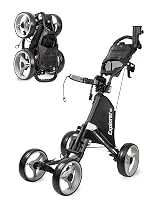
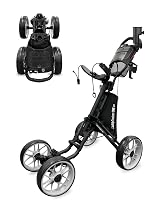
Best Golf Push Carts Made in the USA
Golf push carts made in the USA are rare as fully domestic products. The Alphard Cybercart Push+ is the one cart here that Alphard says is designed and assembled in the USA, and the real skill is telling US assembly apart from a cart that is only designed here or merely sold by a US company.
On this page (9 sections)
- How can you tell if a golf push cart is really made in the USA?
- What does the US-assembled Alphard Cybercart Push+ actually offer?
- Which push cart has the best build quality for walkers?
- Is the CaddyTek CaddyLite the easiest cart to travel with?
- How do the three carts compare side by side?
- Which cart should a senior golfer or a casual walker buy?
- Does US assembly change how you should judge a push cart?
- How do you verify a made-in-USA claim before you order?
- The bottom line on golf push carts made in USA
Golf push carts made in the USA are hard to find as fully domestic products. The honest answer is that one cart in this group, the Alphard Cybercart Push+, is described by Alphard as designed and assembled in the USA, while the other two carry no domestic build claim.
That does not make the US-assembled cart the best cart for everyone. Weight, fold size and how the cart rolls matter more on the course than a country label.
This guide explains how to read a made-in-USA claim, then walks through the three carts and the specs that decide which one suits your walking game.
Our score weighs specs, features and buyer feedback against what you're shopping for. If you walk often, the 4 wheel golf push cart comparison is worth a look before you settle on three wheels.
How can you tell if a golf push cart is really made in the USA?
A cart is only "made in the USA" in the strict sense when it meets the US labeling standard for domestic content. Most carts called American are designed here or assembled here from imported parts, and those are two different claims.
Start with the wording on the product itself. "Designed and assembled in the USA" is a meaningful claim about where the final build happens.
"Designed in the USA" alone says nothing about where the frame, wheels and fasteners come from.
Then check the brand's ownership. A US company can import every cart it sells.
A foreign-owned brand can assemble carts in a US plant. Neither fact on its own tells you where your cart was built.
US assembly vs US design vs US company
Treat these as three separate questions. US assembly means the parts come together in a US facility.
US design means the engineering happens here. A US company means the business is based here.
The Alphard Cybercart Push+ is the clearest example in this group. Alphard says it is designed and assembled in the USA, which covers two of the three questions.
The frame materials and other components can still be sourced elsewhere.
The CaddyTek and Clicgear carts carry no domestic build claim. Clicgear calls itself the industry leader in high-end push carts and describes its carts as designed by golfers for golfers, but that is a design statement, not a manufacturing one.
Rule: read the label, not the brand's address. If the cart you're considering doesn't state where it's assembled, assume imported parts and judge it on features instead.
What does the US-assembled Alphard Cybercart Push+ actually offer?
The Cybercart Push+ is the pick here if domestic assembly is your priority. Alphard says it is designed and assembled in the USA, and the cart uses the same frame as Alphard's award-winning electric model.
The frame is aircraft-grade 6061/6063 aluminum with a low center of gravity, so it sits stable on slopes. Sealed low-resistance bearings and aligned wheels help it track straight with less push effort.
The front wheel swivels 360 degrees and locks in place when you want a fixed line.
Its one-click folding system sets up and collapses without tools or pins. Folded, it measures 20 x 15.5 x 22 in, so it fits in a trunk or locker.
Dual rear brakes hold it on an incline.
The upgrade path is the feature no other cart here matches. Alphard sells a Cybercart Motor Upgrade Kit separately that turns the Push+ into a motorized, remote-controlled caddy with gyroscope and downhill speed control.
That flexibility comes with weight. At 23 lb it is the heaviest of the three, and it carries a premium-tier price.
Pick it if US assembly and the electric upgrade path both matter to you.
Which push cart has the best build quality for walkers?
The Clicgear Model 4.5 has the strongest build story in this group. Its aircraft-grade, scratch-resistant aluminum frame and internally routed brake cable put it at the top of our scores, and the folding hardware is built to handle years of trunk trips.
The console is the standout. It has a sound-amplifying phone holder with charging cord access, magnetic and hook-and-loop pads, and holders for a scorecard, ball, pencil and tees.
A storage bag sits under the console, alongside a mesh basket and an umbrella mount.
The drink holder fits everything from skinny cans to wide bottles. Multiple accessory mounting points let you add gear later without drilling or clamping.
Clicgear uses adjustable upper and lower bag saddles plus a silicone strap system to hold most stand and cart bags. The hand brake keeps the cart parked, and an adjustable front wheel keeps it tracking straight.
It folds to 13 x 15 x 24 in, the smallest folded size of the three. That makes it trunk friendly.
At 16 lb it sits in the middle on weight.
Pick it if build quality and a compact fold beat a domestic label. It's the best cart here for most walkers, and the senior-friendly cart roundup covers lighter options if lifting 16 lb is a concern.
Is the CaddyTek CaddyLite the easiest cart to travel with?
The CaddyLite 11.5 V3 is the lightest cart in this group at 13.75 lb. That lower weight makes it the easiest of the three to lift into a trunk or carry up stairs, which matters if you load and unload the cart every round.
Its 3-step quad-fold system collapses the cart to 28 x 16.5 x 16.1 in. That's longer than the Clicgear's fold but narrower and flatter, so it can slot into a packed trunk or a locker.
The wheels are built for mixed ground. Dual 11.5 in rear wheels and a 10.5 in front wheel roll across fairways, rough and slopes, and the wide wheelbase keeps the cart balanced.
All three are EVA.
The adjustable TPR handle adapts to golfers of any height. A foot-activated brake gives you stopping power on hills and uneven ground without bending down.
Elastic upper and lower straps hold most bags, including oversized or irregular shapes.
Storage covers the basics and more: a mesh net under the handle, a magnetic pad for a towel or rangefinder, an umbrella holder and a drink holder. The aluminum frame comes in Silver, Lime, Black and Red, and Caddytek backs it with a one-year limited warranty.
Pick it if you want the lightest cart and travel storage matters most. If you want the flattest fold or the most useful console, the Clicgear is the better fit.
Our folding walkthrough shows how these frames pack down.
How do the three carts compare side by side?
The comparison table lines up the specs that change how each cart feels on the course. Weight and folded size are the two that affect your daily routine most, so start there.
| Cart | Weight | Frame | Folded size | Domestic claim |
|---|---|---|---|---|
| Clicgear Model 4.5 | 16 lb | Aircraft-grade aluminum | 13 x 15 x 24 in | None |
| CaddyTek CaddyLite 11.5 V3 | 13.75 lb | Aluminum | 28 x 16.5 x 16.1 in | None |
| Alphard Cybercart Push+ | 23 lb | Aircraft-grade aluminum | 20 x 15.5 x 22 in | Designed and assembled in USA |
The CaddyTek wins on weight by more than 2 lb over the Clicgear and more than 9 lb over the Alphard. That gap shows up when you lift the cart into a high trunk or carry it a long way from the parking lot.
The Clicgear wins on folded size. Its 13 in width and 24 in length are the easiest to fit into a tight car boot.
The Alphard's 22 in length is close, but its 23 lb weight makes it the hardest to handle one-handed.
Wheel size favors the CaddyTek. Its dual 11.5 in rear wheels are larger than the wheels Clicgear lists for the Model 4.5.
Larger wheels roll more easily over rough ground and soft turf.
Rule: weigh the cart you'll actually carry. If the cart lives in a garage and rolls out to the first tee, weight matters less than console features and stability.
Which cart should a senior golfer or a casual walker buy?
The best cart for a senior golfer or casual walker is the lightest one that still feels stable. Start with the CaddyTek CaddyLite at 13.75 lb, then move up only if you want a specific feature the lighter cart lacks.
Walking nine or eighteen holes puts a lot of lifting and pushing into a round. A cart 2 to 9 lb lighter is easier to get in and out of the car and less tiring to steer on hills.
That is why the CaddyTek leads for this buyer.
The Clicgear still suits a senior golfer who walks the same flat course every week and wants the best build quality. Its 16 lb weight is manageable for many players, and its compact fold is a real advantage in a small car.
The Alphard is the hardest of the three to handle at 23 lb. It makes sense for a golfer who wants US assembly or plans to add the motor kit later and turn it into an electric caddy.
For most seniors walking every round, the weight is the deciding factor.
Our guide to what to look for in a golf push cart covers the handle height and brake checks to make before you buy. A cart that fits your height and stops reliably matters as much as its country of origin.
Does US assembly change how you should judge a push cart?
US assembly is a real plus, but it should not be the only reason you buy a cart. Judge the cart on weight, fold size, wheels and brakes first, then decide how much the domestic claim is worth to you.
A cart that is heavy or awkward to fold will frustrate you every round, wherever it was built. A lighter cart with a good brake and a compact fold will serve you better over years of walking.
The Alphard's domestic claim comes with real trade-offs: 23 lb and the highest price tier here. If those trade-offs fit your game, the US assembly is a genuine bonus.
If they don't, a lighter cart may still be the better buy.
Warranty support matters here too. Clicgear offers a one-year manufacturer warranty, Caddytek offers a one-year limited warranty and Alphard offers two years against defects in materials or workmanship.
Check how each brand handles replacement parts before you decide.
Rule: decide on specs, then let the domestic claim break a tie. That way the cart you buy is one you'll actually enjoy pushing.
How do you verify a made-in-USA claim before you order?
Verification comes down to the wording on the cart and the brand's own statement. Look for "assembled in the USA" or "made in the USA," and treat "designed in the USA" as a weaker claim that says nothing about the build location.
Ask the seller directly where the cart is assembled if the label is unclear. A brand that assembles in the US can usually say so plainly.
If the answer is vague, assume imported parts.
Then weigh the claim against the specs. A US-assembled cart that is too heavy for you to lift each round isn't a better cart for your game.
The domestic label is worth something, but comfort on the course is worth more.
If you walk with a stand bag and no cart at all, the cart and travel bags category has options for carrying your clubs. For most walkers, though, a push cart saves your back over 18 holes.
The bottom line on golf push carts made in USA
The Alphard Cybercart Push+ is the cart to buy if US assembly is your top priority. Alphard says it is designed and assembled in the USA, and the motor upgrade path means you can convert it to electric later.
Its 23 lb weight and premium price are the price you pay for that claim.
For most walkers, the Clicgear Model 4.5 is still the best cart here. It has the strongest build quality, the tightest fold and the most useful console, and its 16 lb weight is manageable for many players.
Pick it if you want a premium cart and don't need a domestic label.
The CaddyTek CaddyLite 11.5 V3 is the pick for travel and lighter lifting. At 13.75 lb it is the easiest of the three to get in and out of a car, and its quad-fold packs flat.
Decision rule: buy the Alphard if US assembly is the deciding factor, the Clicgear if build quality and a compact fold matter most, and the CaddyTek if light weight and travel storage come first. Check the exact build wording on the cart you order, then judge it on the specs that affect your round.
Frequently asked questions
Are there any golf push carts made entirely in the USA?
No cart here is confirmed as 100 percent US-made. Alphard says the Cybercart Push+ is designed and assembled in the USA, which is the strongest domestic claim in this group, but components can still come from elsewhere.
How can I tell if a golf push cart is actually made in America?
Look at the product label for a US assembly statement rather than trusting the brand's home country. A US company can sell a cart built overseas, and designed in the USA is a weaker claim than assembled in the USA.
Does a US-made golf push cart cost more than an imported one?
US assembly usually sits in the premium tier because labor costs more. Compare the features you actually use, such as fold size and wheel size, against the domestic claim before paying extra for it.
Is a US-assembled cart easier to get repaired?
Assembly location does not guarantee faster repairs. Check the warranty length and whether the brand offers replacement parts, since those two things matter more than where the cart was put together.
What matters most when buying a push cart for walking?
Weight, folded size, wheel size and brake type decide how the cart feels on the course. A lighter cart is easier to lift into the trunk, while larger rear wheels roll better over rough ground and slopes.